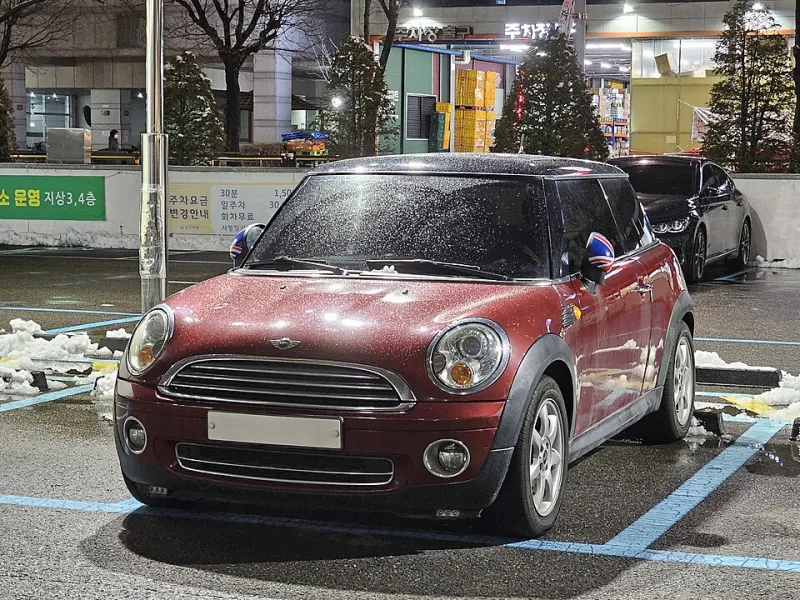
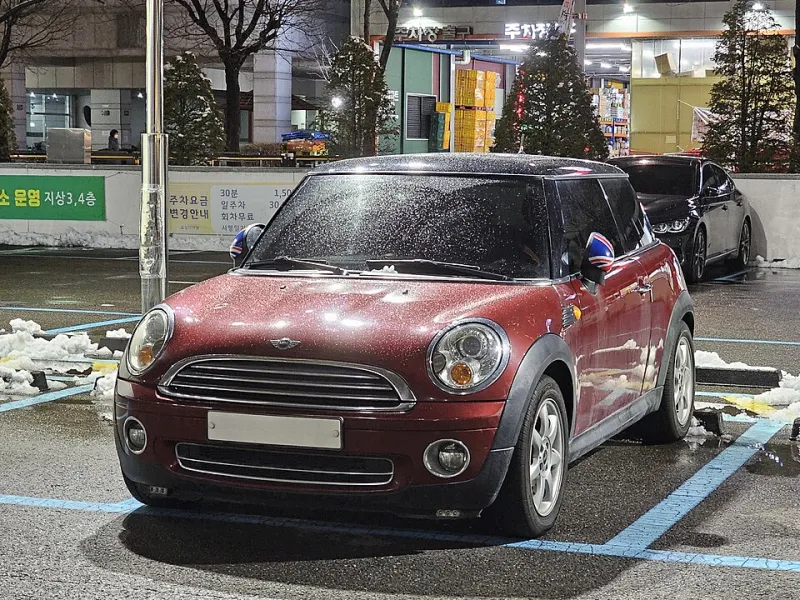
The Pothole Tax: Which Mini Suspension Parts End Up Paying For It
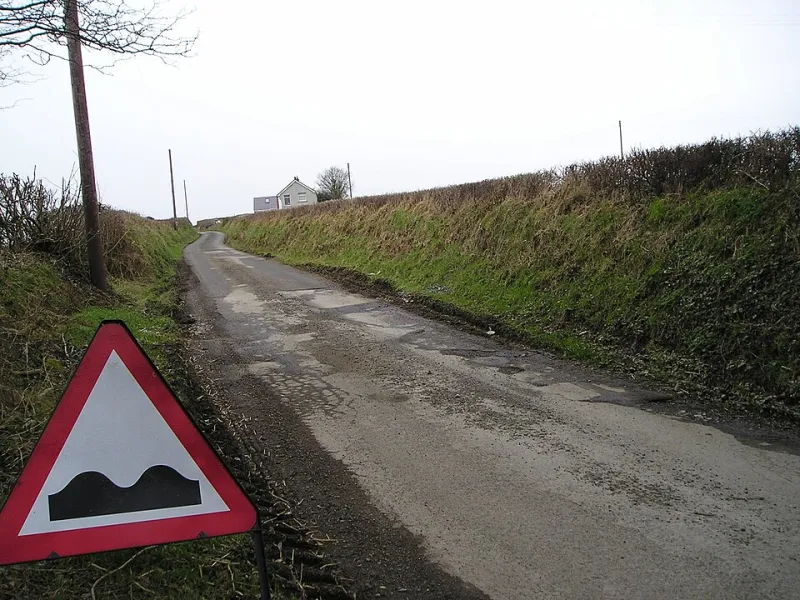
Photo: Marion Phillips, CC BY-SA 2.0, via Wikimedia Commons
There is a stretch of road near us that has been resurfaced three times in six years and is still, somehow, worse than it was before. Every Mini that goes over it pays a small tax. Not at the council office, but at the front end, one drop link at a time.
Potholes do not damage suspension randomly. They deliver a sharp, high-frequency shock load that the system was never really designed for, and the parts that suffer are usually the cheapest, smallest and most easily forgotten.
What a pothole actually does
The tyre and wheel take the first hit. The sidewall flexes, the rim deflects, and whatever is left of that energy goes into the strut top mount, the control arm bushes, the ball joint and the wheel bearing. Repeat that a few hundred times on a commute and something has to give.
Alloy wheels buckle quietly. A wheel that holds air perfectly well can still be two millimetres out of round, and that shows up later as a vibration at 60mph that no amount of balancing will fix.
Matching the noise to the part
Owners often describe the same symptom in three different ways, so start with where and when you hear it.
A light rattle over broken surfaces at low speed is nearly always the front anti-roll bar drop links. They are tiny, cheap and work hard. Cheap ones can start knocking again within twelve months.
A creak or twang when you turn the wheel points at the front strut top mount and its bearing. On older Minis this is a common creak, and it gets worse in cold weather.
A single clunk under braking or when pulling away often traces to the rear bush on the front lower control arm. The rubber degrades and the arm starts moving when it should not, which shows up as vague steering long before it makes a noise.
A knock over every bump, plus play at the MOT means ball joints. These are a safety item, not a comfort item. Do not put them off.
A hum or drone that changes when you load the steering one way or the other is a wheel bearing. Left untreated it becomes a rumble you can feel through the floor, and eventually play in the hub.
A sharp metallic bang, or a car sitting unevenly can mean a broken spring. Snapped springs are extremely common on UK roads and are a straight MOT failure. Stop and look.
The parts that matter, and where cheap hurts most
Drop links are the one place where the budget option is genuinely tempting, because the price difference feels absurd for two small rods. The problem is that the ball joints in cheap links have poor dust seals and thin grease, and they seize rather than wear. Buy a branded set and you will not see them again for years.
Bushes are a judgement call. Original-style rubber gives you the ride Mini intended and lasts well if the roads were kind. Polyurethane bushes tighten things up and last longer, but they transmit more noise and vibration, which on a daily driver in a city is a trade you might not want. A sensible middle ground is standard rubber for the front lower arm rear bush and poly only where you actually want sharper response.
Wheel bearings come as complete hubs on most Minis, which is good news. Fit a reputable bearing brand, torque the hub nut properly and get the alignment checked afterwards. A cheap bearing can howl within a few thousand miles, and the labour is the same either way.
Top mounts should always be replaced as a pair with new bearings. Reusing a bearing that has already been creaking is a guaranteed repeat visit.
Alignment is the step everyone skips
A pothole impact can knock the front toe out by a noticeable amount, and you will not feel it as a pull so much as vague steering and scrubbed inner tyre shoulders. If you have replaced a control arm, a track rod end, a strut or a wheel, book a four-wheel alignment. It is a fraction of the cost of a pair of tyres.
Check tyre pressures too. Uneven pressures mimic alignment faults and cost nothing to rule out.
When to stop driving
Most suspension knocks are annoying rather than dangerous, but a few are not.
- Vibration through the steering wheel that appears suddenly after an impact
- Visible play in a wheel when the car is jacked up
- A wheel that has visibly lost its shape, or a tyre with a bulge in the sidewall
- A car that pulls hard to one side or a steering wheel that is no longer centred
- Any bang followed by a change in ride height
If any of those apply, get it looked at before the next motorway trip. A failed ball joint or a cracked spring at speed is not a hypothetical risk.
Recovering some of the tax
If a pothole has genuinely damaged your car, report it to the relevant council and photograph everything: the hole with something for scale, the damage, and the location. Keep your receipts. Councils have defences available to them, and a claim is far from guaranteed, but a report with evidence is the only version that has a chance of going anywhere. Reporting it also gets the hole filled, which is the bit everyone benefits from.
A ten-minute check after a bad hit
Park up, look at the tyre sidewalls for bulges, run a hand around each rim for flat spots, and check the ride height at each corner. Then take it somewhere quiet and listen: slow speed over a speed bump, a gentle slalom, and a steady 50 to 60mph run. Noise under load one way points at a bearing. Noise over ripples points at links. A creak on lock points at top mounts.
Keep on top of the small knocking parts and the expensive ones tend to look after themselves. The pothole tax is unavoidable, but you can decide whether you pay it in drop links or in a wheel, a tyre and an alignment all at once.